Clay Oven Restaurant, 1170 W. Patrick St. Frederick, MD 21703 (301) 631-2004. Visit their website: www.clayovenmaryland.com

When you make the transition to a plant-based diet, you soon discover that ethnic restaurants offer the most vegetarian and vegan options. I have tried many different cuisines over the years and have discovered some new favorite dishes I had never been exposed to as a carnivore. If you are just toying with the idea of switching to a healthier lifestyle, then Indian food is a great place to start. It is a favorite of mine. There are so many plant-based dishes on The Clay Oven’s menu, and most can easily be tweaked to accommodate your dietary preferences if you consult your server.

The Clay Oven, an unassuming establishment in a small strip mall along The Golden Mile, is one restaurant we have found that checks all the boxes. The restaurant offers the finest Indian-Nepalese Cuisine in a casual atmosphere, and the food is always delicious. One thing that surprised me when we began to venture into Indian cuisine is the variety of spices used in their recipes. The spicy flavors are something that differs quite a bit from what the typical American is used to, but be brave. I find the unique flavors delightful.

Indian food is notoriously hot. The one thing you should inquire about is how hot (spicy hot) some recipes are. I like to taste just a little bit of hotness, and my primary rule about any meal is “food should not hurt.” I do not enjoy food that burns your mouth and throat so much that you cannot carry on a conversation at the table because you are coughing, eyes watering, and blowing your nose so much that speech is impossible. At the Clay Oven this is not an issue, If you inform your server, they will tell the chef how you would like it prepared. This restaurant listens (some don’t). On a hotness meter, from 1 to 10, I always say I am a 2 (not very spicy) and I’m never disappointed. My husband, who loves spicy food, never gives them any instruction and has several favorite entrees he usually orders so he can compare with other restaurants. This time he ordered Aloo Mattar. Don’t forget to order some Naan. I have recently fallen in love with the Kashmiri Naan. My husband prefers the Garlic Naan. . . also a favorite of mine. The Clay Oven checks all our boxes.

For dessert I ordered Gaajar Halwa, a carrot pudding. Yummy!

I highly recommend this unassuming little restaurant for lunch or dinner. You won’t be disappointed.

Aloo Mattar with Garlic Naan
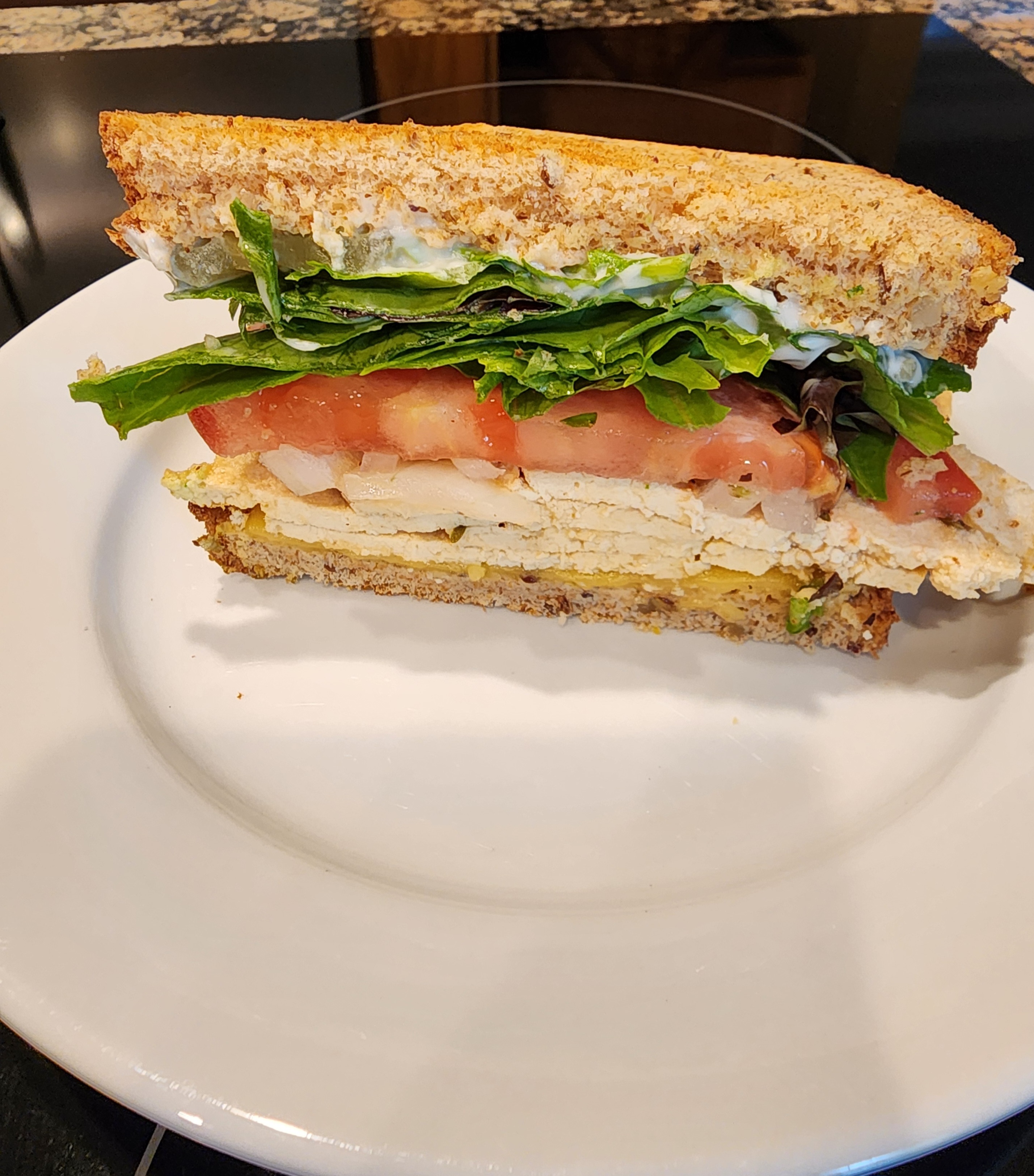
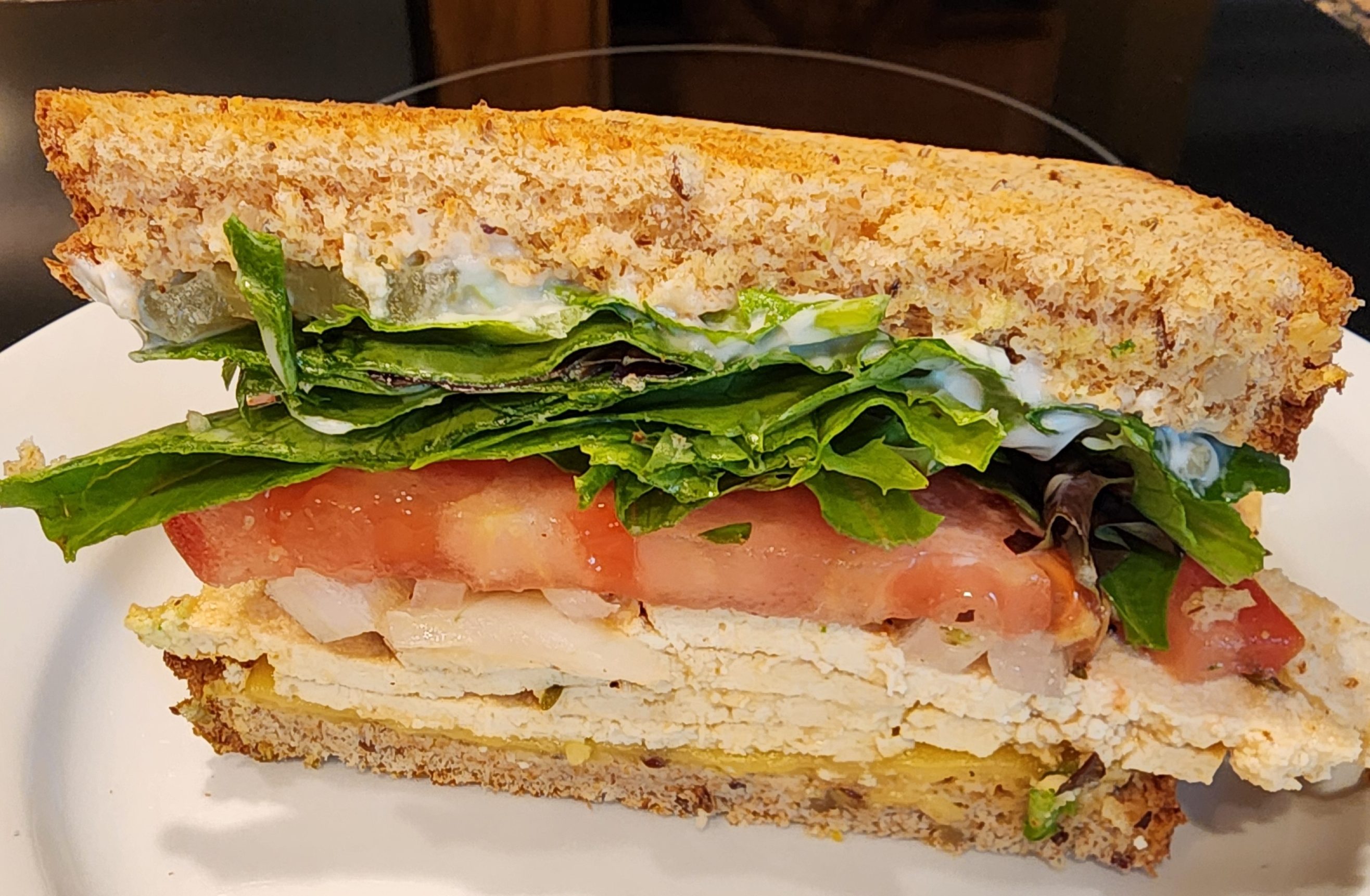
Vegan Deli Sandwich “Meat” Recipe

There are several vegan sandwich meat recipes online, and I have been trying a few of them. I was so happy to find a more affordable option than the expensive commercial varieties available at our supermarket. In addition to price, I like to know what ingredients are in everything I serve, and I can say that this recipe passes my fussy standards.

Ingredients:

Note: Make the marinade first to allow flavors to blend while you slice the tofu.

A 1Ib block of super-firm tofu (squeeze out the excess water before you begin. There won’t be much with this variety of tofu, but any excess water will dull the flavor of the marinade).

1 cup warm water

2 tsp. “Better Than Bouillon” vegetable seasoning

1 tsp dried thyme

1 Tbsp nutritional yeast

1/4 tsp. garlic powder

1/8 tsp ground pepper

2 tsp Bragg’s Liquid Aminos

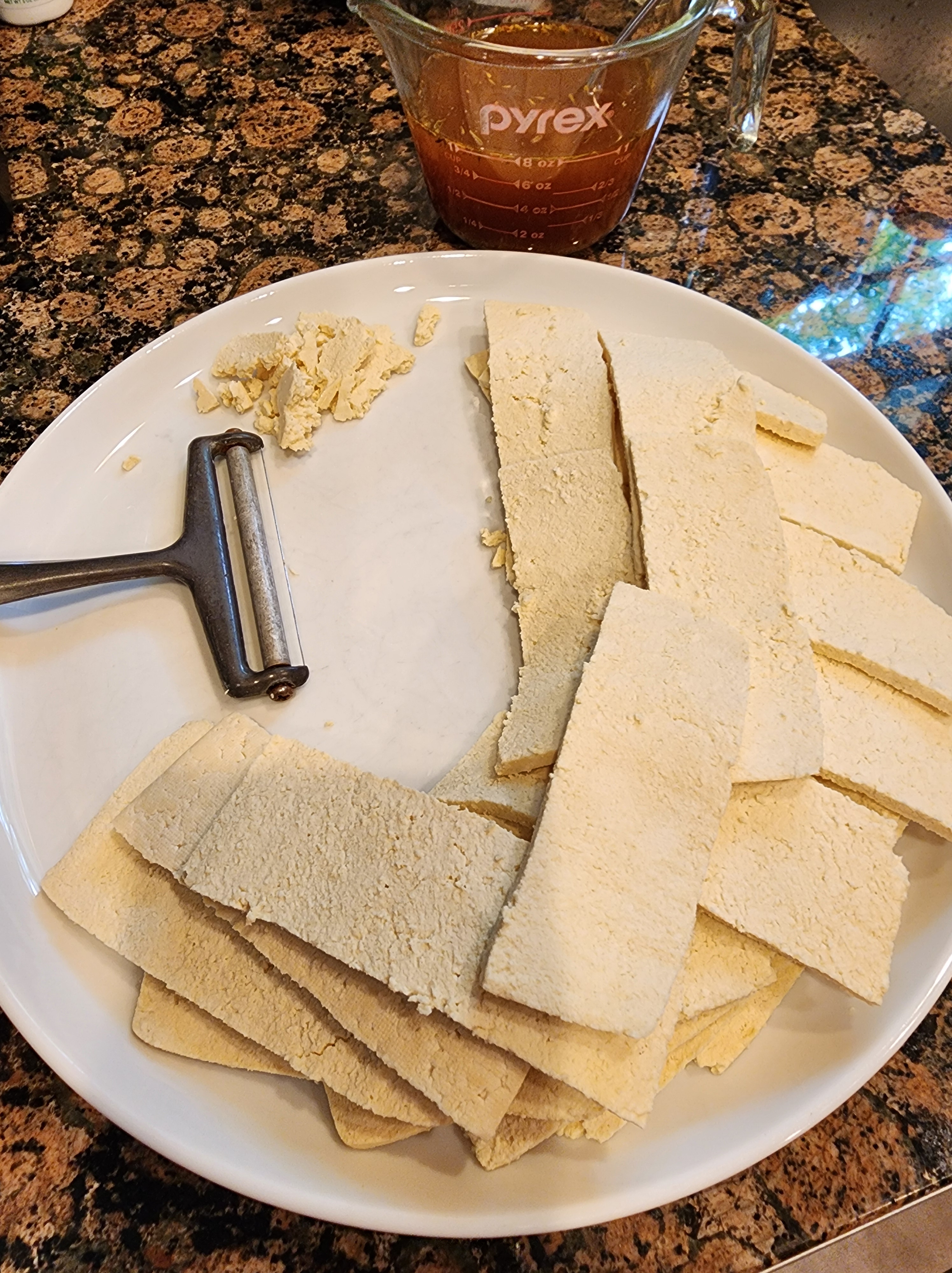
Set marinade aside and slice the drained tofu very thin. I used a cheese slicer to do this, but you could use a thin sharp knife instead.

In a large skillet, spoon in enough marinade to cover the bottom of the pan. Layer the slices and spoon a portion of the marinade over each layer. Top with any leftover marinade.

Turn heat on LOW and allow tofu to simmer gently for about 30 minutes. Do not let it boil, and do not stir. Tofu is very delicate and will easily break apart. I used a turkey baster to occasionally drip marinade over the top layer and a silicone spatula to lift slices to get some extra marinade between the layers of tofu as it cooked.

When done, remove from heat, but allow the tofu to cool in the pan to absorb as much flavor as possible. Tofu will suck up that marinade like a sponge. When ready, create your sandwich. Pile the deli “meat” on as thick as you desire. Makes a hearty, savory vegan sandwich, toasted with a slice of your favorite vegan cheese (we like smoked provolone). Add toppings: tomato, lettuce, onion, pickles, and your favorite condiments. Tofu deli meat will keep in the frig for several days. Enjoy!

For more recipes and plant-based tips visit https://www.vegtutor.com

Zip-zap Crockpot Stew for Those Extra-busy Days

Crockpot Stew

Some days are just so jam-packed that if you don’t make dinner in the morning it’s not going to happen at all. I hate the four o’clock feeling of not having an answer when people start asking “What’s for dinner?”. . . especially when I still have two more hours of work ahead before I can even think about dinner. When you are facing one of those busy days, then your crockpot (slow-cooker) can be your best friend.

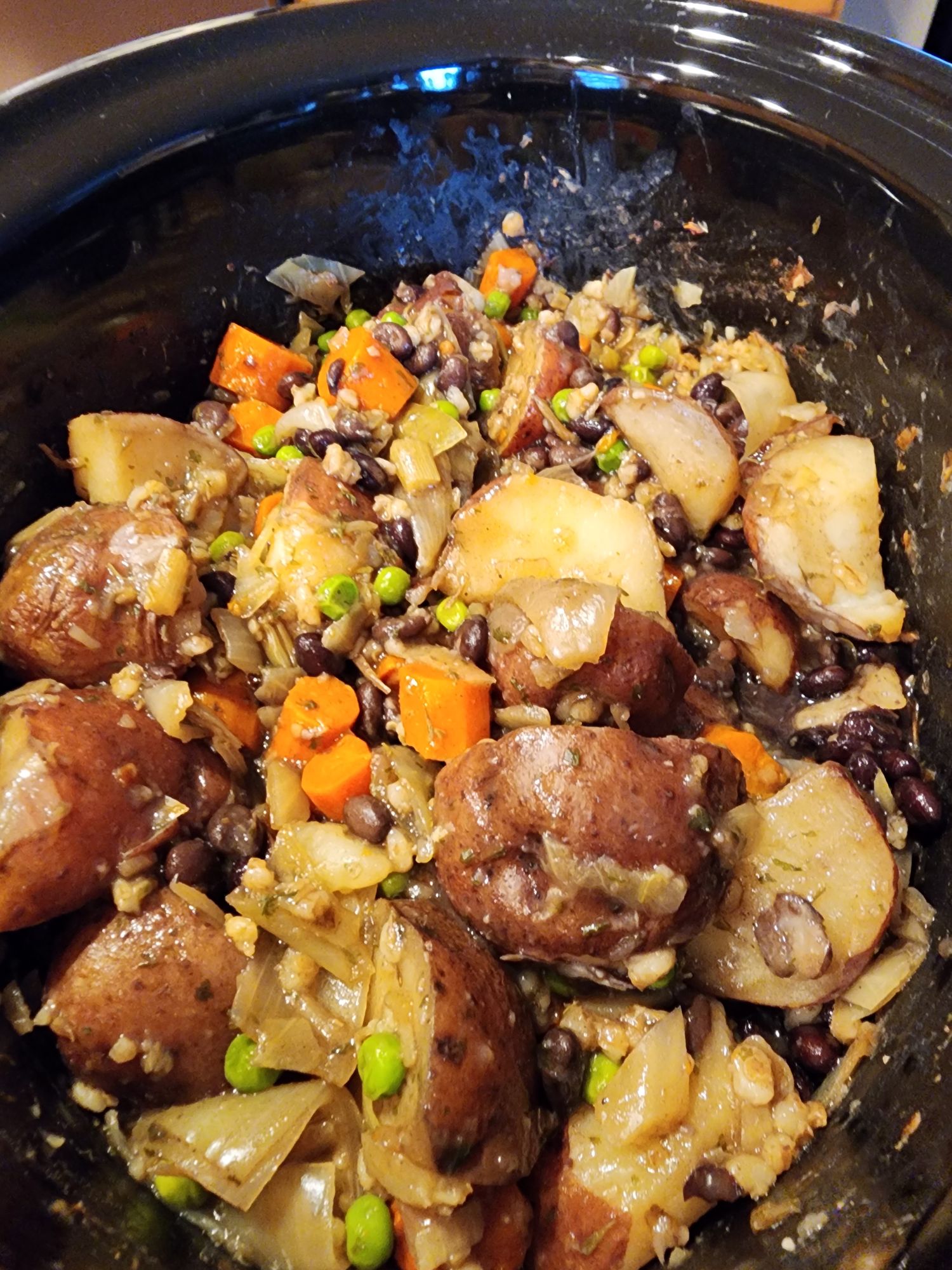
I confess that this recipe, at the start of one of those hectic days, was also the result of discovering that I had mistakenly bought a big bag of potatoes when I already had one at home. . . oops! So right after breakfast (If I had been planning ahead I could have cleaned and chopped all the vegetable the night before) I began scrubbing potatoes and peeling carrots and onions (because those are the primary ingredients in any good stew). Then I chopped a wedge of raw leftover cabbage, 1 cup of chopped celery, and put everything in the crockpot with 6 cups of water and a packet of onion soup mix, 3 cloves of minced garlic, and some extra seasonings (You can be creative here).

For protein I added a can of seasoned black beans and about 8 ounces of frozen peas. To thicken, add 1/4 cup pearl barley. All these ingredients and the amounts are flexible as are the seasonings; I was flying by the seat of my pants and in a hurry, but it worked, so feel free use what you have on hand and experiment if you are adventurous.

INGREDIENTS:

4 – 5 medium potatoes, scrubbed and quartered

4 large carrots, peeled and sliced 1-inch

I large onion, peeled and chopped 1-inch

1 cup of fresh cabbage, chopped 1-inch

1 cup celery, chopped

3 cloves minced garlic

6 cups water

1 packet onion soup mix

1/4 cup barley

1- 15 ounce can seasoned black beans

8 ounces frozen peas

(I would have added some dry red lentils also, if I had thought of it. They would have added more protein and creaminess to to stew)

Seasonings I used, but you can vary these if you prefer:

1 1/2 Tbsp. dry parsley, 1 tsp. ground thyme, 1 bay leaf

METHOD:

I did not pre-steam any of the ingredients because this recipe will slow cook for hours. Simply throw all ingredients into the crockpot, stir, cover, and set on low for 6 – 8 hours. Then dash off to your next project.

At the end of the day, you will be welcomed by the savory aroma of a healthy dinner already made (and an answer to everyone’s questions), and that is a satisfying feeling. You are on top of things — you can do this!

Sample the stew about 15 minutes before serving. Add salt or Braggs Amino Acids and pepper to your liking. (If you have any bits of leftover cooked vegetables in the frig, the perfect time to use them up is now. Add them, stir, and allow them to heat up and flavors to mingle for about 15 minutes).

Serve with a simple side salad and some rolls or breadsticks. It’s a no stress, no mess dinner and only one pot to wash!

How to Stock a Vegetarian Pantry

While browsing the Internet I came across this article which I thought would be helpful to people who are new to the vegetarian lifestyle. I remember searching for hours for things I could eat when I made the switch (grocery shopping took forever!). I hope this is useful as you set up your vegetarian kitchen. When you have the common ingredients already on hand cooking is a breeze.

How to Stock a Vegetarian Pantry

from wikiHow – The How to Manual That You Can Edit

A vegetarian pantry has different needs from a more general pantry. It is important to keep vegetarian foods on hand that will provide energy and nutrients; and substitutes for other non-vegetarian food products. This article will help you achieve you goal of a well-stocked and healthy vegetarian pantry, all in the span of just a few hours.

Steps

  1. Clean out your pantry. If you are changing to a vegetarian diet, or even if you are simply updating an existing impoverished vegetarian pantry, it is time for a good clean out. Remove all out-dated food, any food with unsuitable animal-derived products (ovo-lacto vegetarians can keep more foods than vegans) and remove anything that lacks labels but you aren’t quite sure what it is. Wipe down all the shelves and allow to dry.
  2. Go shopping. It is always a good idea to stock a new pantry with as many fresh items as possible at the same time, so that the items date together. If you are simply restocking, keep items that are still plenty in date but note them. Make sure to write a list of the items that you need, so that you are not overwhelmed by choices or forgetful as to what you need.
  3. Select your items in food groups. A vegetarian pantry that is stocked with the basics should contain:
    • Grain products: rice (especially brown, arborio, jasmine, basmati and sweet), millet, couscous, quinoa, kasha, wild rice (aquatic grass), buckwheat, barley, polenta, and whole grain flours.
    • Pasta and noodles: pasta made from grain products (e.g., wheat pasta, rice pasta), noodles (e.g., udon, buckwheat etc.). Try to avoid quick-cook noodles; these tend to have a lot of the healthy nutrients removed and are often high in trans-fats.
    • Legumes: dried legumes (peas, split peas, lentils, puy lentils, chickpeas/garbanzo, kidney beans, pinto beans etc.), tins/cans of legumes, shelf-stored tofu.
    • Instant mixes for veggie burgers, falafels, etc. Try to prefer organic options and low sodium.
    • Vegetables and fruits: There are various ways of storing these in the pantry:
      • Tins/cans of fruit in natural syrup, tins/cans of some vegetables. Try to avoid sourcing a lot of your fruit and veggies in this way because canned varieties lose nutrients, have high sodium, and can leach chemicals from the can soldering/composition into the food over time. Always choose cans that are free from dents, and be sure to check use-by dates.
      • Preserved fruit and vegetables. Follow the instructions carefully if you make your own at home.
      • Dehydrated fruits and veggies can also be kept in the pantry for reconstitution.
      • Dried fruit. A must for both eating and cooking with. Apricots, peaches, pears, apple, nectarines etc. are all great choices. Beware of added sugar; dried pineapple, strawberries, paw-paw, kiwifruit etc. often have considerable added sugar.
    • Nuts and seeds: Nuts and seeds should be eaten quickly to ensure that they remain fresh. Only purchase small amounts at a time. It is handy to always have on hand walnuts, almonds, sunflower seeds, pumpkin seeds, cashews, pecans and sesame seeds. Peanuts are a personal choice given modern allergy problems. Nut and seed butters are also very useful to keep on hand; consider tahini, peanut butter, cashew nut butter, almond butter etc. Some require refrigeration on opening.
    • Flavourings: There are a number of key flavourings that no vegetarian pantry should be without. These include:
      • Nutritional yeast
      • Soy sauce, shoyu, tamari; look for low sodium options
      • Vegetable broth/stock cubes, liquid or powder – check ingredients carefully!
      • Cheese sauce or cheese substitute sauces in packets; packet soups
      • Seasoned vegetable salt (there are numerous good brands around)
      • Concentrated liquid stock or flavouring derived from vegetable, herb and spice sources (a few drops will do each use)
      • Curry powder
      • Seasonings such as herbs, spices, salt, pepper etc. Dry your fresh herbs for seeing the winter through
      • Seaweed products for seasoning, including dulse
      • Flavoured vinegars, dressings
    • Sweeteners such as raw and organic sugar, stevia, rice syrup, agave syrup, honey, maple syrup, xylitol etc. Select whatever suits your needs, preferences, and dietary requirements.
  4. Have a few treats in store. It is useful to have some treats on stand-by for guests, children and the munchies. Good products include dark chocolate, soy chocolate, chickpea crisps, wasabi peas, sugar-free cookies (sweetened with alternatives), microwave popcorn and raw kernals, etc.
  5. Keep a few quick packet mixes for cakes, muffins and pancakes. Prefer organic and low-sugar versions where possible. It isn’t always possible to be a saint and make your own baked goods from scratch; having these packaged possibilities still allows you to add fresh fruit, macadamia oil in place of saturated fats and you have the choice of using eggs or not. This is far better than resorting to store-bought goodies.
  6. Have milk on hand. It is always handy to have some shelf milk on hand for times when you run out and guests arrive. Depending on your needs, you can purchase dairy, soy, nut, grain and other milks that can be shelf-stored. Flavoured milks are also handy, including chocolate, vanilla and strawberry.
  7. Keep an eye on use-by dates and discard products that go beyond these. They might seem all right, but once stale, items never taste quite as fresh. They also do not provide the same nutrients as fresher, in-date items. Circulate goods at the back of the pantry and bring them to the front at least monthly, if not more often. It’s easy to forget about items you can’t see, and the less you waste the happier your wallet will be.

Tips

  • Places to stock up on vegetarian pantry foods include health food stores, health food co-ops, large health-food oriented super-stores or supermarkets, fruit and vegetable stores, some bulk/wholesale stores, local markets (farmer’s markets etc.) and straight from boutique stores on farms.
  • Don’t over look your local supermarket. Many “regular” grocery stores are now catering to the Vegan crowd by offering several varieties of soy milks, tofu and vegetarian meat substitutes as well as organic produce.
  • Some specialty grocery stores are also great to visit in and discover new flavours and textures; try Chinese, Lebanese, South African, Italian, West Indian, Samoan, etc. stores for new ideas.
  • Some artificial sweeteners, while low in calories, have been implicated in health problems in some individuals. Research carefully before choosing an artificial sweetener option. Stevia is a good, natural sweetener alternative that avoids potentially problematic chemicals.

Things You’ll Need

  • Pantry
  • Items as listed in article
  • Shopping bags – take your own

Related wikiHows

Article provided by wikiHow, a collaborative writing project to build the world’s largest, highest quality how-to manual. Please edit this article and find author credits at the original wikiHow article on How to Stock a Vegetarian Pantry. All content on wikiHow can be shared under a Creative Commons license.

Free Vegetarian Starter Kit

   An absolutely free vegetarian starter kit is available at www.goveg.com/order.asp . This website contains  information from and about PETA, People for the Ethical Treatment of Animals. The vegetarian starter kit contains lots of resource materials and some great vegan recipes. If you are at all interested in the purity of the foods you eat and protecting the planet this is a valuable educational website.

Book Review: “Divine Health” Biblezine

   “Divine Health” is a part of a unique book genre called a Biblezine. It is the complete NKJV New Testament, but with added articles on health and wellness edited by Dr. Don and Mary Colbert. Every page contains scriptural wisdom as well as tips on natural treatments, food facts, spices of the Bible, recipes, beauty and health information, and more. 

   Let me just say as clearly as possible: I LOVE THIS BIBLE! It adds a whole new dimension to personal Bible reading. Although not promoting a completely vegetarian lifestyle, each time I sit down to read it is an enlightening experience making the Bible so applicable to where I live today and questions I have about maintaining a healthy body, relating all that information back to the Word of God. I am thoroughly enjoying my current journey through the “Divine Health” New Testament and highly recommend it to anyone especially those who have read the scriptures before and are looking for a refreshing spin on age-old wisdom.

   “Divine Health” Biblezine is about the size of, and looks like, a magazine making it convenient to take along in a briefcase, beach bag, or backpack. The colorful photographs and artwork compliment the magazine format, and there are even areas provided for your own personal notes. “Divine Health” Biblezine is published by Nelson Bibles and can be purchased for$16.99 U.S. .

Garlic Bread

 GARLIC BREAD

Warm garlic bread goes great with Miracle Fat Burner Stew or any other stew or pasta. This is how I make a low-calorie garlic bread (you won’t miss the butter!)

Take one large garlic bulb(do not peel) and slice off the top one third (you want to expose the top of each clove). Wrap the entire bulb in aluminum foil and bake at 400 degrees for 1/2 hour. When done each clove will be creamy and can be spread, just like butter, on a slice of warm wholegrain bread. Yum!

Miracle Fat-Burner Stew

This is one of the first recipes I ever posted, and it is still a family favorite. Sometimes the simple meals are the best. I make this stew often because it’s so easy, uses simple ingredients you can find anywhere, no exotic spices or expensive equipment needed. If you have a very big pot and a wooden spoon, then you can make this and know that you are feeding your family a delicious, home-cooked, plant-based meal.

I found this easy recipe years ago in a magazine, and have used it many times since. It makes A LOT. (You need a very large stock pot to accommodate the recipe — a traditional dutch oven will not do). This recipe is great when you are cooking for a crowd, but if you are cooking for just one or two you can use the leftovers to make one of the variations on different nights so you don’t get bored. It also freezes well, so you will always have something on hand when you are too busy or too tired to cook. Serve with a crusty wholegrain bread and maybe a salad.

I hope you love this recipe as much as I do!

RECIPE

Makes 10 (2-cup) servings: 258 cals.; 18 g. protein; 4 g. fat; 45 g. carbs.; 1.54 mg. sodium; 0 mg. chol.; 12 g. fiber

1 1/2 bags (1 lb. ea.) dried lentils

2 Tbsp. olive oil

2 c. chopped onions (1 12 oz. bag frozen)

2 Tbsp chopped garlic (6 cloves)

1 can (6 oz.) tomato paste

10 c. vegetable broth

1 can (28 oz.) stewed tomatoes

1 Tbsp. salt

1 tsp. paprika

1 tsp. cayenne pepper

2 bags (1 lb. ea.) assorted frozen vegetables (broccoli, cauliflower, & red pepper work well)

3 Tbsp. wine or balsamic vinegar

Sort and rinse lentils. In a very large pot saute onions and garlic in olive oil for 4 – 5 minutes. Add lentils and cook 1 minute, stirring. Add tomato paste and cook 1 minute stirring. Add broth and spices. Break up tomatoes into pieces with back of spoon. Bring to a boil. Reduce heat and simmer, partially covered, until lentils are very soft (ab. one hour).

About 10 minutes before serving add frozen vegetables and vinegar. Heat through.

MIRACLE FAT-BURNER STEW VARIATIONS:

To one (2-cup) serving of stew, stir in any of the following and simmer 3 – 5 mins.

CHINESE:

   1/2 c. cubed firm tofu

   1 tsp. soy sauce

   1 tsp. peanut butter (reduced fat)

   1/2 tsp. sesame oil

   1 sliced scallion

MEXICAN:

1/2 c. salsa

Heat through and top with 1/4 c. shredded veggie cheese

HARVEST STEW:

1/4 c. frozen baby carrots

1/4 c. orange juice

1/4 c. canned pumpkin

1/8 tsp. ground cinnamon

INDIAN:

1 tsp. curry powder

1 tsp. tumeric

1 Tbsp. golden raisins

2 Tbsp plain soy yogurt

1 Tbsp cashews

1 tsp. chopped cilantro

Kale and Onion Stir-fry

Recipe:

Kale and Onion Stir-fry

1 lb. fresh green kale

2 onions, sliced

2 Tbsp. rice vinegar

2 Tbsp. soy sauce

1/2 tsp. sweetener (sugar, honey, etc.)

     Clean kale and remove ribs, and chop.

     Spray wok or skillet w/ cooking  spray. heat on high, add kale and onions. Stir for 1 – 2 minutes.

     Pour in rice vinegar, soy sauce, and sweetener. Reduce heat to medium and stir-fry until kale and onions are crisp tender.

Add:

     3/4 cup slivered almonds

     1 Tbsp. Bragg’s Liquid Amino Acids

     3 – 4 Tbsp. water

     8 oz. chow mein noodles

     Cover pot and steam, stirring occasionally until noodles soften slightly.

Makes 4 main-dish servings